
Volume 26, Issue 2, June 2026
16 articles
Original Article
Brian Josephson, Timothy Chan, Carol A. Sames, Tamara A. Scerpella, Jodi N. Dowthwaite
Keywords: Adolescent, Exercise, Female, Grip Strength, Peak Torque
Abstract
Objective: In this exploratory analysis, we evaluated our validated 3-year circum-menarcheal arm bone loading index (ARMBLI) as a predictor of upper extremity muscle function indices in post-menarcheal females. Methods: Forty-eight participants met inclusion criteria for non-dominant arm analyses, 1 to 2.5 years post-menarche: 1) menarche date (GYNAGE: yrs, menarche-centered age); 2) ARMBLI (3-yrs prior loading exposure); 2) grip strength (kg; primary outcome), 3) Biodex peak torques (Nm: shoulder, elbow; flexion, extension; secondary outcomes), 4) DXA arm non-bone fat-free mass (armNBffm, kg), 5) anthropometry [ulna length (mm), height (cm), weight (kg)]. Multiple linear regression evaluated muscle function in the total sample (n=48), gymnasts (n=24), and non-gymnasts (n=24), accounting for key factors: 1) whole-body model (GYNAGE, height, weight, ARMBLI); 2) hypertrophy model (GYNAGE, ulna length, ARMBFFM, ARMBLI). Results: After accounting for key factors, ARMBLI was an independent negative predictor of grip strength in the total sample [hypertrophy model B= -0.202, p=0.029] and non-gymnast subsample [hypertrophy model B= -0.935, p=0.030; whole-body model B= -1.127, p=0.005]. Conversely, ARMBLI was an independent positive predictor of shoulder flexion peak torque in the total sample [whole-body model B= +0.270, p=0.036]. Conclusions: Despite prior work showing ARMBLI predicts ARMNBFFM, ARMBLI showed inconsistent predictive value for muscle function indices.
Original Article
Nongnuch Luangpon, Wirasinee Srijunto, Sirawee Chaovalit, Mac Thi Luu, Nutsupa Singhasoot, Supparada Aewzipo, Saule Salatkaite-Urbone, Sigitas Kamandulis, Pornpimol Muanjai
Keywords: Eccentric Contraction, Leg Flexibility, Mechanical Property, Muscle Mass, Stretching Duration
Abstract
Objectives: This study aimed to examine the effects of unilateral long-duration static stretching (LS) on range of motion (ROM), musculotendinous unit (MTU) stiffness, muscle thickness (MT), strength, and contralateral effects (CE) in young men with hamstring tightness. Methods: Sixty-eight young men (22.0±1.7 years) were randomly assigned to one of four groups: LS, typical-duration static stretching (SS), hamstring resistance exercise (HRE), or control. ROM, MTU stiffness, MT, and knee-flexor peak torque were assessed at baseline, after the 6-week intervention, and at the 3-month follow-up. Results: ROM improvement after the 6-week was observed across the LS, SS, and HRE groups (all p<0.05). Significant decreases in MTU stiffness were observed, with reductions of 0.13 Nm/deg in the hamstrings for both the stretching groups (all p<0.05). At the 3-month follow-up, reductions in MTU stiffness remained evident in the LS group. A significant time effect was observed for bilateral peak torque without interaction or group effects, while MT showed no changes. Conclusions: One hour of hamstring stretching did not result in superior improvements in ROM, MTU stiffness, or morphological and CE adaptations compared to other exercise modalities. Nevertheless, SS remains a time-efficient approach to enhance flexibility and mechanical properties in a home-based setting. Clinical trial registration: Thai Clinical Trials Registry (TCTR20250219007).
Original Article
Takanori Matsuura, Masaki Yamaguchi, Koichiro Kuwahara, Koji Yoshie, Yukari Okuma, Masahiro Yuki
Keywords: Athlete, Biomarker, Muscle Damage, Speed Skater
Abstract
Objective: This study aimed to explore whether resting creatine kinase (CK) levels are associated with a combination of commonly used psychophysiological parameters in speed skaters. Speed skaters were regarded as ideal candidates for this study, considering the sport’s high incidence of muscle damage. Methods: Participants consisted of nine speed skaters, including international-level competitors, and nine non-athletes who served as controls. Measurements included CK, ferritin (Fer), perceived fatigue level (PFL), sleep quality assessment (SQA), international physical activity questionnaire (IPAQ), pulse rate, blood pressure, physical activity, thigh circumference, handgrip strength, and jump height. A multiple regression analysis was performed with CK as the dependent variable and the other psychophysiological parameters as independent variables. Results: CK, IPAQ, thigh circumference, and jump height were significantly higher in speed skaters (p<0.05), whereas pulse rate and PFL were significantly lower (p<0.05). In an exploratory multiple regression analysis, a combination of pulse rate, mean arterial pressure, PFL, and SQA showed the highest coefficient of determination (R2 = 0.54), suggesting that these variables may be associated with inter-individual variation in resting CK levels. Conclusion: The combination of conventional psychophysiological parameters was associated with variation in CK levels. These findings provide preliminary evidence that CK may be a plausible biomarker of muscle damage in elite speed skaters.
Original Article
Yusuf Gözaçık, Hasan Aykut Aysan
Keywords: Female Basketball Players, Functional Movement, Functional Movement Screen, Proprioceptive Neuromuscular Facilitation
Abstract
Objective: This study aimed to examine the effects of proprioceptive neuromuscular facilitation (PNF) stretching exercises on functional movement performance in female basketball players. Methods: A pre-test/post-test experimental design with intervention and control groups was used. Participants who met the inclusion criteria were randomly allocated to the experimental and control groups in a 1:1 ratio. The experimental group performed PNF stretching exercises in addition to their regular training program, three days per week for eight weeks, while the control group continued with standard training only. Functional movement performance was assessed using the Functional Movement Screen (FMS), with individual FMS subtests analyzed, and all assessments were conducted by a blinded assessor. Results: Within-group improvements were observed in several FMS subtests in the experimental group (p < 0.05), particularly in measures related to lower-extremity stability, balance, and movement coordination, while no significant changes were found in the control group. Between-group comparisons of change scores (Δ post–pre) demonstrated significantly greater improvements in the experimental group for selected FMS subtests, indicating a beneficial effect of PNF stretching. Conclusion: PNF stretching exercises appear to be an effective method for enhancing specific components of functional movement performance in female basketball players. Incorporating PNF-based stretching into regular training programs may contribute to improvements in selected movement quality and performance outcomes.
Original Article
Toshifumi Fujiwara, Motoki Koga, Ryosuke Yamaguchi, Nobuhiko Yokoyama, Yasuharu Nakashima
Keywords: Calcaneal Bone Status, Musculoskeletal Health, Quantitative Ultrasound, Skeletal Muscle Index, Toe Grasp Strength
Abstract
Objectives: The aim of this study was to investigate associations between toe grasp strength (TGS), skeletal muscle mass, and calcaneal bone status in young adults, and to determine whether TGS independently associates with musculoskeletal parameters. Methods: This cross-sectional study included 150 healthy young adults (118 males, 32 females; median age: 23 years). TGS was assessed using a standardized toe grasp dynamometer. Skeletal muscle mass was measured by bioelectrical impedance analysis (InBody 570), and calcaneal bone status was evaluated using quantitative ultrasound, expressed as standardized speed of sound (s-SOS). Associations between TGS, skeletal muscle index (SMI), and s-SOS were examined using correlation and multivariable regression analyses, with sex-stratified analyses. Results: Significant sex differences were observed in TGS, SMI, and s-SOS, with males showing higher values. In males, TGS was positively associated with both SMI and s-SOS. Multivariable analyses showed that higher TGS and younger age were independently associated with greater SMI and s-SOS in males. No significant associations were observed in females. Conclusions: In males, higher TGS is associated with greater skeletal muscle mass and better calcaneal bone status, suggesting that lower limb muscle strength reflects musculoskeletal status during early adulthood. Longitudinal studies are required to further clarify these associations.
Original Article
Nesma M. Allam, Norah Zayed Alanazi, Tuqa Amin Alsattam, Taif Nawaf Asharari, Aeshah Abdulhakim Alowaydhah, Rahaf Nazzal Alfalah, Khuzama Tariq Alghali, Angham Mohammed Alsaleem, Thikra Mamdouh Alsirhani, Najah Saad Alshammari, Milaf Hashel Alsharari
Keywords: Adult Females, Age Differences, Hamstring Tightness, Lumbar Lordosis, Trunk Flexibility
Abstract
Objectives: To determine the relationship between age, hamstring tightness, trunk flexibility, and lumbar lordosis angle (LLA), and examine how these variables relate independently of age. Furthermore, we identified the most significant predictor of LLA in sedentary adult females with hamstring tightness. Methods: This cross-sectional study included 80 sedentary adult females (20-59 years old) with hamstring tightness, which was assessed using the active knee extension (AKE) and straight leg raising (SLR) tests with a universal goniometer. Trunk flexibility was assessed using the fingertip-to-floor test, and the LLA was evaluated non-radiographically using a flexicurve (flexible ruler). Results: A significant correlation was observed between age and all examined variables (p < 0.001). Specifically, age was associated with increased fingertip-to-floor distance, suggesting reduced trunk flexibility (β = 0.756), and increased SLR (β = 0.517) and AKE (β = 0.424) angles, indicating increased hamstring tightness. Furthermore, age was the significant independent predictor (p < 0.001) of LLA. Conclusions: Age is significantly correlated with decreased flexibility and reduced lumbar lordosis angle in adult females. Among the variables examined, age was the significant independent predictor of LLA. These findings highlight the need for early detection and management of age-related musculoskeletal alterations to maintain proper spinal alignment and functional mobility.
Original Article
Tahir Keskin, Mesut Ergan, Zeliha Başkurt, Ferdi Başkurt
Keywords: Flexibility, Hamstring Muscles, Jump Performance, Mulligan BLR, Static Stretching
Abstract
Objectives: This study compared the acute effects of static stretching (SS) and the Mulligan bent leg raise (BLR) technique on hamstring flexibility and jumping performance in asymptomatic young adults. Methods: Forty-two participants with bilateral hamstring tightness were randomly assigned to the SS or BLR group (n = 21 each). Active knee extension (AKE), vertical jump (VJ), and single-leg hop (SLH) performance were assessed before and immediately after a single intervention session. Results: A significant main effect of time was found for all outcomes (p<0.05). Significant time × method interactions were observed for AKE and SLH, but not for VJ. The BLR group showed greater improvements in hamstring flexibility (AKE: +6.38°) compared with the SS group (+2.10°). SLH performance improved more in the BLR group, whereas VJ improvements were similar between groups. After adjusting for baseline AKE differences, post-intervention AKE remained significantly higher in the BLR group. Conclusion: Both SS and BLR produced beneficial acute effects on hamstring flexibility and jumping performance. BLR demonstrated larger acute improvements in hamstring flexibility and single-leg hop performance in this sample; however, these findings should be interpreted cautiously and may not be directly generalizable to athletic populations. ClinicalTrials.gov ID:NCT07138950.
Original Article
Hossam M. Alsaid, Younes A. Khadour, Hoda M. Zakaria, Ebtesam M. Fahmy, Fater A. Khadour, Rehab S. Mamoon, Azza S.A. Khalil, Walaa M. Ragab, Ashraf A. Darwesh, Mohamed G. Ali
Keywords: Deep Sensation, Post-COVID-19 Polyneuropathy, Quality of Life, Sensory Rehabilitation, Tactile Sensation
Abstract
Objectives: This study evaluated the effect of sensory re-education on quality of life and sensation in patients with post-COVID-19 polyneuropathy. Methods: Forty patients with post-COVID-19 polyneuropathy were randomly assigned to a study group (Group A) or a control group (Group B), each with 20 participants. Group A received a sensory re-education protocol plus the traditional physiotherapy, including proprioceptive neuromuscular facilitation (PNF) and strengthening exercises for wrist extensors, hand grip, and thumb opposition. Group B received the traditional physiotherapy alone. Both groups were treated for one hour, three times weekly, for six weeks. Quality of life was assessed using the Arabic WHOQOL-BREF. Tactile sensation was assessed using the Semmes-Weinstein Monofilament (SWM) test, and proprioception via the laser-pointer angle reproduction test (LP-ART). Assessments were performed pre- and post-intervention. Results: Both groups showed significant pre- to post-treatment improvements in quality of life, proprioception, and tactile sensation (p≤0.05). Group A demonstrated significantly greater gains in quality of life and proprioception compared to Group B (p≤0.05), but no statistically significant difference between groups in tactile sensation (p>0.05). Conclusion: Sensory re-education, when integrated into traditional physiotherapy, significantly improves quality of life and proprioception in post-COVID-19 polyneuropathy but does not significantly affect tactile sensation. These findings support incorporating sensory re-education into rehabilitation protocols to enhance functional outcomes in this population. ClinicalTrials.gov ID:NCT05911113.
Original Article
Murat Toprak, Nurşen Toprak, Mehmet Reşit Oncu, Abdussamet Batur, Abdullah Yılgor, Nazım Bozan
Keywords: Acoustic radiation force impulse, Bell’s palsy, Elastography, Electromyography, Rehabilitation
Abstract
Objective: To evaluate ARFI elastography as a diagnostic and monitoring tool in Bell’s palsy by comparing affected and unaffected facial muscles, pre- and post-treatment. Methods: Thirty patients with Bell’s palsy (17 females and 13 males, mean age 44.6±16.76, range:18-72 years) were assessed using Clinical (House-Brackmann grading), electrophysiologic (EMG), and ultrasonographic (ARFI-elastography). In order to assess the diagnostic value of elastosonography, we compared the scores between the paretic and nonparetic sides of the face. Measurements were obtained bilaterally at baseline and after four weeks of physical therapy. Results: The initial degree of facial nerve paralysis was 5.13±0.89 on the House-Brackmann scale (range 4-6). This parameter significantly decreased after the treatment, measuring 2.53±0.81. Post-treatment, significant improvements were observed in EMG and ARFI values, particularly in the orbicularis oculi and masseter muscles. No significant correlation was found between EMG and ARFI elastographic parameters. Conclusions: ARFI elastography is a promising, non-invasive tool for monitoring Bell’s palsy recovery, though standardization is needed.
Original Article
JingYao Jiang, DongLiang Zhang, HongFeng Ye, TianXiong Qiu, JunFeng Zhu, ZhenXing Zhang
Keywords: Arthrogenic Muscle Inhibition, Knee Ligament Reconstruction, Neuromuscular Dysfunction, Predictors, Range of Motion
Abstract
Objectives: To explore arthrogenic muscle inhibition (AMI)’s impact on mobility after anterior/posterior cruciate ligament (ACL/PCL) reconstruction, identify early predictors of postoperative stiffness, and inform clinical rehabilitation. Methods: In this prospective cohort study, 146 ACL/PCL reconstruction patients were split into stiff (passive flexion 5° at 12 weeks [T2]) and non-stiff groups. Preoperative data, knee function (ROM, gait, muscle strength, proprioception) and AMI indicators (quadriceps VA, H/M ratio) were assessed at 4 weeks (T1) and T2. Boruta, multivariate logistic, and multiple linear regression analyzed predictors. Results: The stiff group had longer injury-to-surgery intervals, higher patellar tendon use, worse ROM/gait/strength/AMI metrics at T1-T2. The four most important predictors for T2 stiffness were T1 passive flexion, extension deficit, H/M ratio, and VA; T1 H/M (OR=4.82) and extension deficit (OR=3.85) were major risks. T2 H/M correlated negatively with passive flexion (β=-0.73), T1 VA with extension deficit (β=-0.38). The logistic model demonstrated good predictive performance (optimism-corrected C-index = 0.890). Conclusions: AMI associates with post-ACL/PCL mobility issues. Four early indicators predict T2 stiffness, with H/M impacting flexion and VA affecting extension, guiding personalized rehabilitation.
Original Article
Sara E. Ali, Abd Elaziz A. Sherif, Osama A. El-Agamy, Monira I. Aldhahi, Sara Y. Elsebahy
Keywords: Erb’s Palsy, Dynamometer, Hand Function, Sensory-Motor Integration, Upper Limb Rehabilitation Program
Abstract
Objective: This study examined sensory-motor integration training effects on activities of daily living (ADLs) in children with Erb’s palsy. Methods: A randomized controlled trial enrolled 32 children aged 2–6 years with Narakas Type I Erb’s palsy. This assessor-blinded study randomly allocated participants using sequentially numbered, sealed opaque envelopes to control group (60 minutes of an upper-limb rehabilitation program) or study group (45 minutes of the same upper-limb rehabilitation program plus 15 minutes of sensory-motor integration training; total 60 minutes/session). Interventions were delivered three times weekly for 12 weeks. The primary outcome was the Jebsen–Taylor Hand Function Test (JTHFT) Simulated Feeding subtest; secondary outcomes included other JTHFT subtests and grip strength, measured at baseline and week 12. Results: Both groups showed significant within-group improvements in grip strength (p<0.001). Post-intervention, the study group demonstrated significantly greater grip strength versus control (5.42±0.81 vs. 3.36±0.46), with a between-group difference of 2.06 units (95% CI: 1.58–2.54) and very large effect size (Cohen’s d=3.13; p<0.001). The study group showed greater improvement in feeding performance (Δ=13.93s; 60% improvement) than control (Δ=11.27s; 51% improvement). Conclusion: Combined with an upper limb rehabilitation program, sensory-motor integration training significantly improves functional abilities and daily living skills in children with Erb’s palsy. ClinicalTrials.gov ID:NCT06324643.
Original Article
Zhiqing Chen, Min Wang, Zepei Zhang, Chun Zhang, Yuzhe Cao, Shaoming Liu, Shuzhang Guo, Jun Miao
Keywords: Bone Marrow Mesenchymal Stem Cells, Cell Proliferation, miR-27a, Osteogenic Differentiation, Steroid-associated Femoral Head Osteonecrosis
Abstract
Objectives: To investigate the expression of microRNA-27a (miR-27a) in patients with steroid-associated femoral head osteonecrosis (SAN) and its regulatory effects on bone marrow mesenchymal stem cells (BMSCs). Methods: The expression levels of miR-27a and the osteogenic-related genes Runt-related transcription factor 2 (Runx2) and bone morphogenetic protein 2 (BMP-2) were measured in bone marrow samples from SAN patients and controls. Human BMSCs were cultured in vitro and divided into four groups: blank control group, mimic negative control (mimic NC) group, miR-27a mimic group, and miR-27a inhibitor group. Cell proliferation, osteogenic differentiation, and expression of osteogenic-related genes were assessed. Results: The relative expression levels of miR-27a, Runx2, and BMP-2 in bone marrow tissues of the SAN group were significantly lower than those in the control group (all P<0.001). miR-27a expression was positively correlated with Runx2 and BMP-2 expression (P<0.001). Compared with the mimic NC group, the miR-27a mimic group showed increased cell proliferation (OD values), alkaline phosphatase (ALP) activity, number of calcium nodules, and expression levels of Runx2 and BMP-2 (all P<0.05). Compared with the mimic NC group, the miR-27a inhibitor group showed significantly decreased cell proliferation (OD values), ALP activity, number of calcium nodules, and expression levels of Runx2 and BMP-2 (all P<0.05). Conclusion: miR-27a may promote the proliferation and osteogenic differentiation of BMSCs by upregulating Runx2 and BMP-2 and may represent a potential therapeutic target for the treatment of SAN.
Original Article
Nanae Fukushima, Norimi Sumitomo, Ayata Nagira, Yuko Ichinose, Akira Kakegawa, Tetsuji Moriizumi
Keywords: Hypoglossal nerve, Long resection, Spontaneous regeneration, Spontaneous reinnervation, Tongue muscle
Abstract
Objectives: This study aimed to investigate spontaneous tongue muscle reinnervation after long nerve resection for severe hypoglossal (XII) nerve injury in adult rats. Methods: The right XII nerve was exposed, and a 9-mm section was resected. The tongue was removed and cut coronally at 4, 8, and 12 weeks after the XII nerve resection. The sections were processed for immunohistochemical staining for vesicular acetylcholine transporter (VAChT) to detect the regenerated right XII and the uninjured left XII nerve terminals. The numbers of VAChT-positive nerve terminals were counted on the injured right and uninjured left sides, and the reinnervation rate, which is the percentages of the number of VAChT-positive nerve terminals on the injured side relative to that on the uninjured side, was calculated. Results: The injured XII nerve gradually regenerated in the tongue after the nerve resection. The reinnervation rates in nerve-resected rats were significantly lower than those in normal rats, with mean reinnervation rates of 13.9%, 37.9%, and 41.8% at 4, 8, and 12 weeks after nerve resection, respectively. Conclusion: Spontaneous reinnervation occurred in the tongue muscle after the XII nerve injury with long nerve resection and injured nerve terminals regenerated approximately 40% of the normal value; this rate was considerably lower than that with the nerve transection.
Original Article
Xiaowei Jiang, Xin Ye, Taoye Li, Zhengfeng Mei, Yichun Zhang
Keywords: Articular Cartilage Degeneration, Astragalus Polysaccharides, Caspase-1, NLR Family Pyrin Domain Containing 3, Osteoarthritis
Abstract
Objectives: Cartilage degeneration is a key pathological change in osteoarthritis (OA). This study investigated the mechanism by which Astragalus polysaccharides (APS) alleviate cartilage degeneration. Methods: Primary rat articular chondrocytes were isolated, and a cell degeneration model was induced with lipopolysaccharide (LPS). Different concentrations of APS (100, 200, 400 mg/L) were tested, and NLR family pyrin domain containing 3 (NLRP3)-knockdown chondrocytes were generated. Cell viability (CCK-8 metabolic activity), levels of inflammatory factors, and gene and protein levels of markers associated with cartilage degeneration (including Acan, Adamts5, Nlrp3, and Caspase-1) were measured. Results: APS at different concentrations improved cell viability (CCK-8) of LPS-induced chondrocytes, inhibited the inflammatory cytokines interleukin-1β (IL-1β) and IL-18, upregulated Acan, and downregulated Adamts5, Nlrp3, and Caspase-1. Nlrp3 knockdown produced similar effects to APS, improving chondrocyte degeneration in vitro. Conclusion: APS alleviates LPS-induced degenerative responses in primary rat chondrocytes, and its protective effect is associated with modulation of the NLRP3/CASPASE-1 axis.
Clinical Quiz
Symeon Naoum, Christos Koutserimpas, Amr ElKhouly, Neville C. Davies, Evdokia Billis, Maria Piagkou, Charalampos Matzaroglou, Efstathios Chronopoulos
Keywords: Αvascular Νecrosis, Femoral Head, Hip, Hip Dislocation, Τraumatic Νecrosis
Commentary
Jiayi Chen
Keywords: Balance, Body Mass Index, Children, Normal, Plantar Pressure
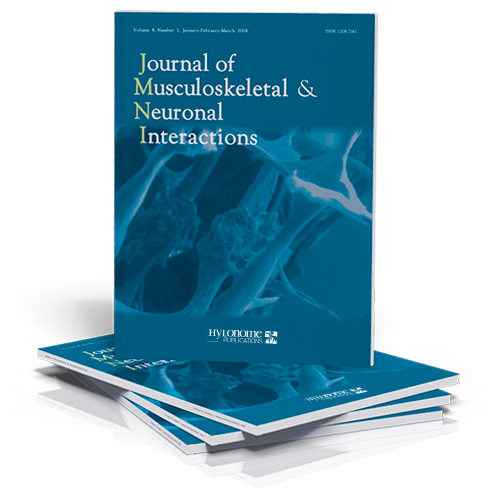
The Journal of Musculoskeletal and Neuronal Interactions (JMNI) is a peer-reviewed journal dedicated to advancing interdisciplinary research on the intricate relationship between the musculoskeletal and nervous systems... Read more
JMNI is..
- Open-access world-wide
- Easy to reach: One click from PubMed to full article
- Independent: Made by scientists for scientists
- Multidisciplinary: Cuts through academic silos
- Affordable: Low publication fees
Instructions on submitting your manuscript